
ElmoRietschle-Logo-RGB-scaled.jpg

Reach Out to us

Have questions or need more information? Choose one of the options below to contact us, request a service, or find a local distributor

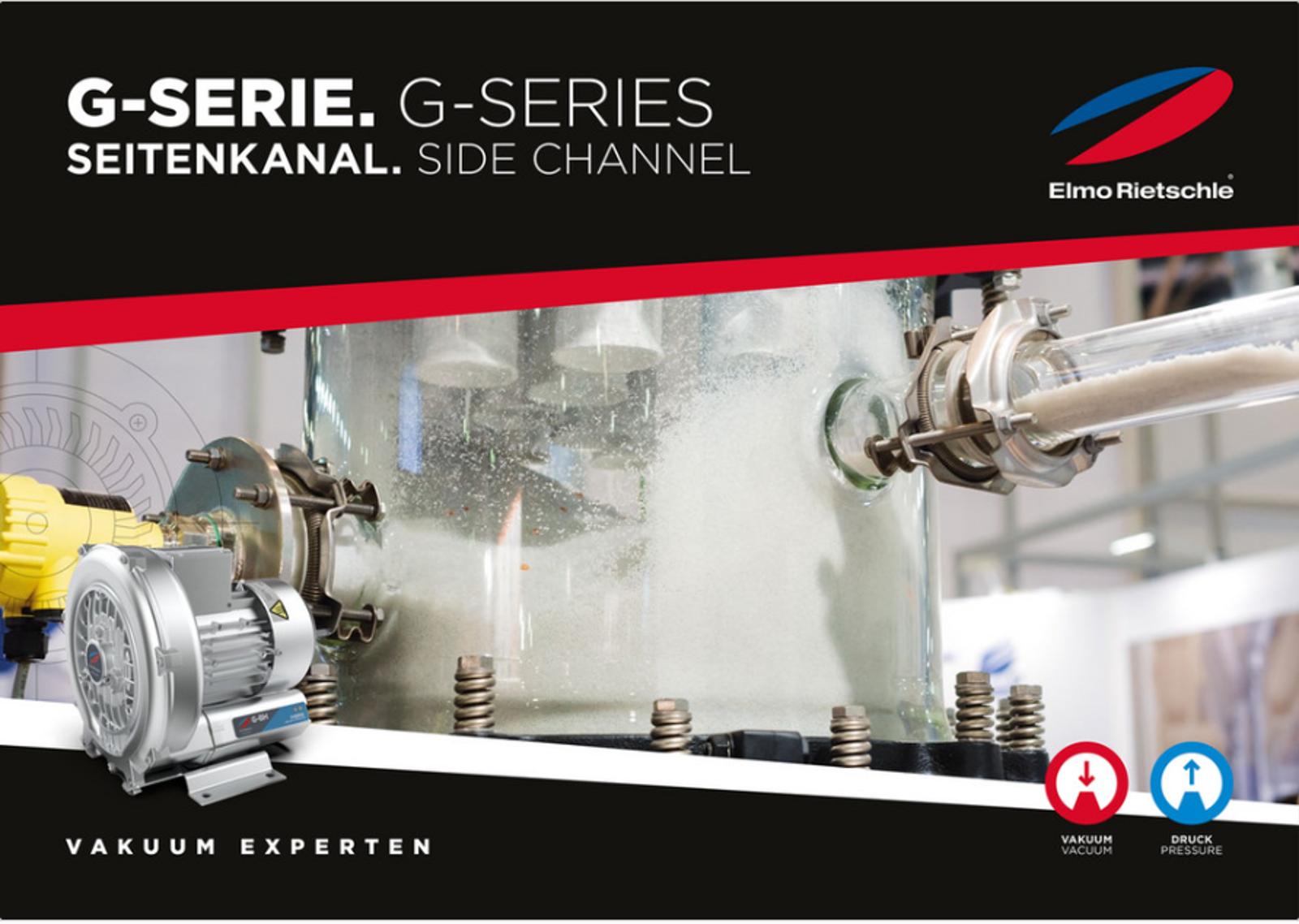
Side Channel Blower (G Series): Oil‑Free Vacuum and Compressed Air for Industrial Applications

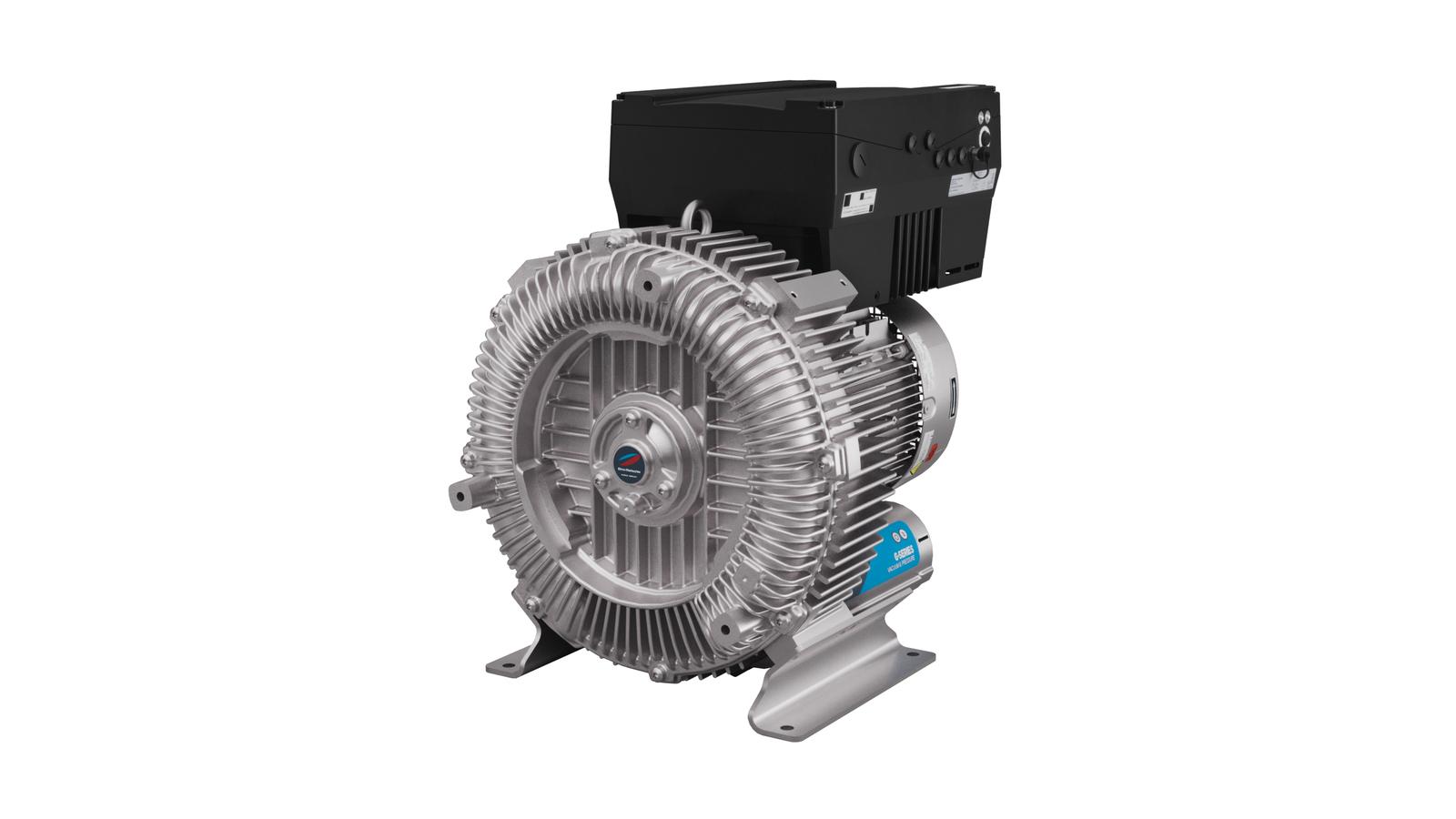
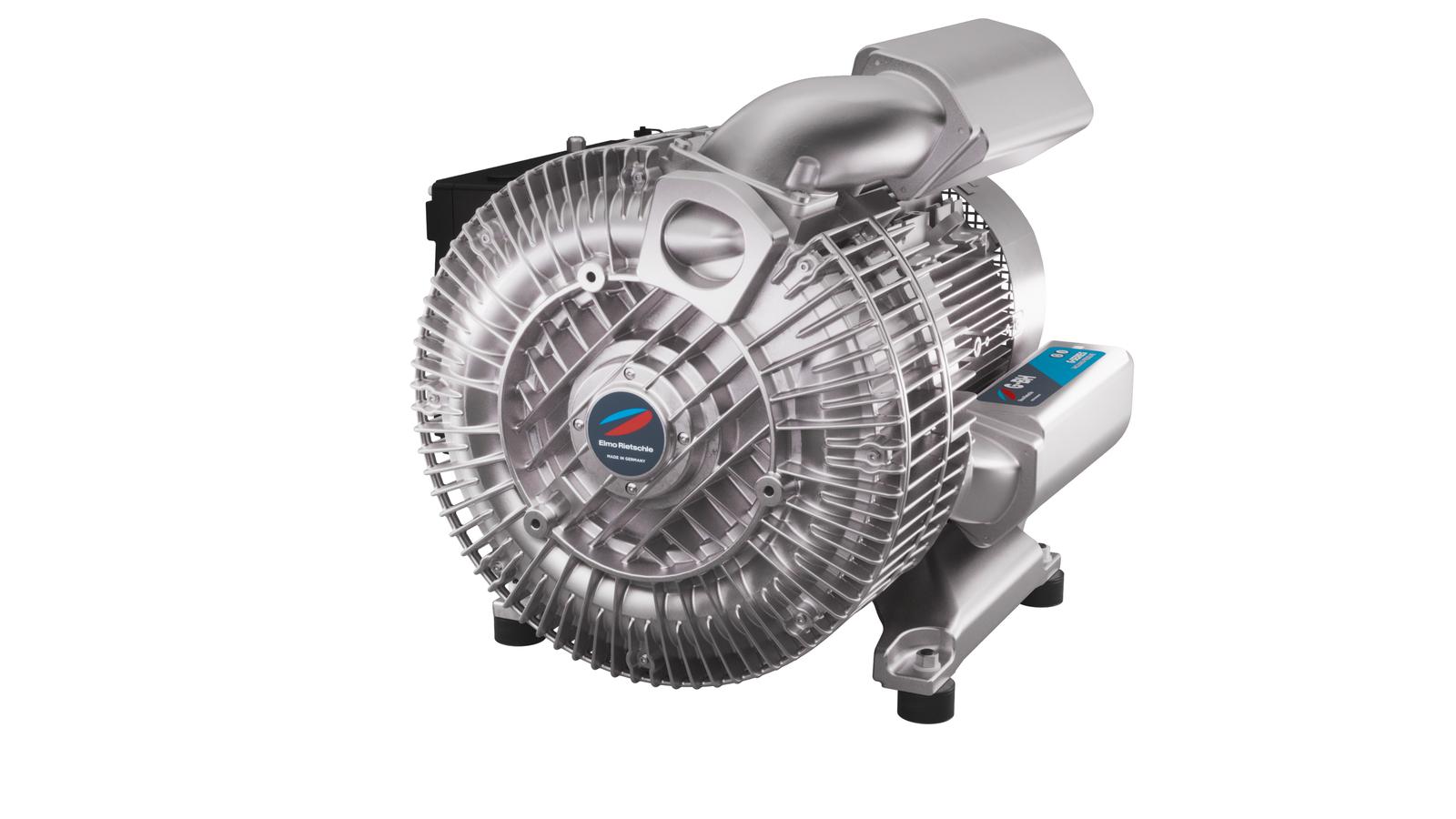
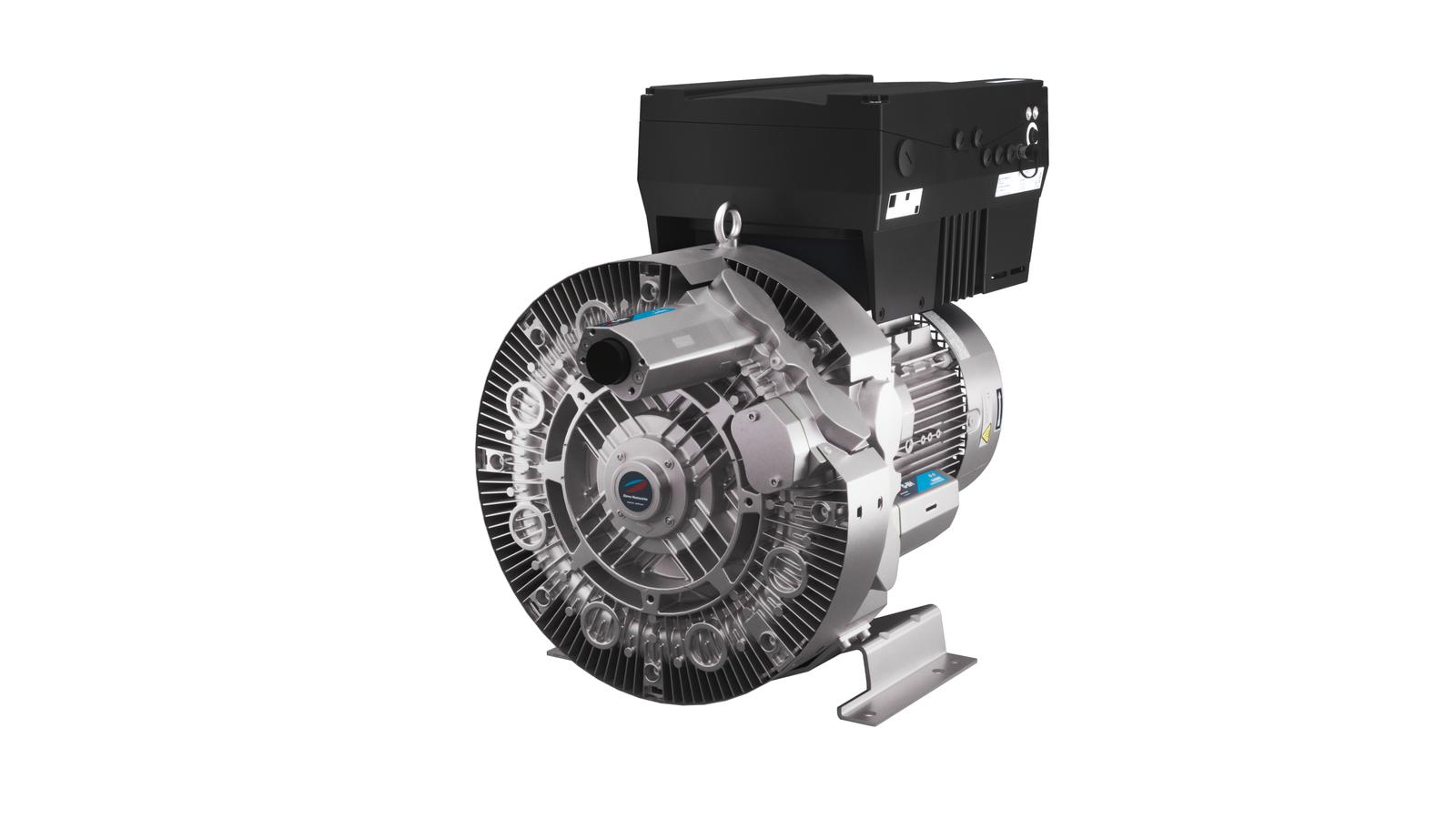
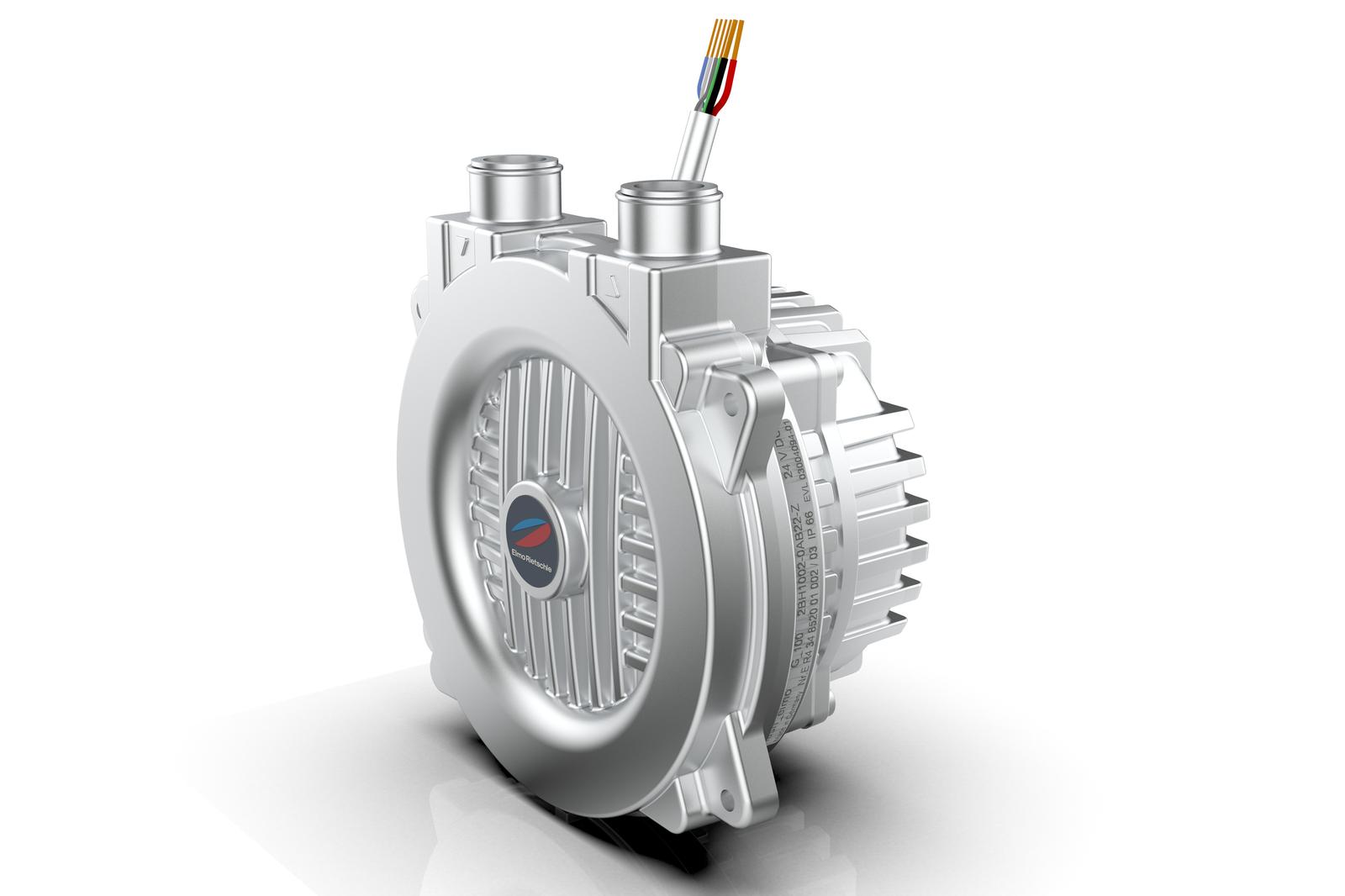
The G‑Series Side Channel Blowers from Elmo Rietschle use innovative technology to provide reliable, contact‑free compression for industrial applications. G‑Series Side Channel Blowers deliver dependable vacuum and compression solutions for industrial processes – featuring dry‑running, contact‑free compression, high differential pressures, and a wide performance range. Depending on model and configuration, they typically achieve volume flows up to 3,000 m³/h and differential pressures up to 1,100 mbar. Side Channel Blowers are also referred to as regenerative blowers; terminology varies by industry. The G‑Series motors support flexible voltage ranges (50/60/87/100 Hz), high protection classes (IP55 and above), and ATEX certification for use in hazardous environments. With their robust design and virtually maintenance‑free operation, Elmo Rietschle Side Channel Blowers offer reliability and versatility for decades of trouble‑free performance.
Evaluate Your Blower Solution Options – Make A Decision Based On Quantified Benefits

Trusted globally, our Side Channel Blowers are the go-to choice for reliability and quality, with more than 2 million units enhancing our customers’ operations worldwide and a perfect track record.

Embracing the future, we have introduced the High-Speed Radial Blower, an advanced, energy-efficient member of our product family, a testament to innovation carrying only premium features and delivering premium performance.

Every single blower technology has its unique value proposition, and every customer challenge has its optimal blower solution depending on the process-specific parameters and key decision criteria. Discover all your viable options with our user-friendly energy calculator, quantify the potential of the various blower types, and let us help you making the best choice for your application.

Features

  • Dry running, contact-free compression
  • High differential pressures up to 1,100 mbar
  • Volume flow up to 3,000 m³/h
  • Reliable operation with up to 20,000 hours between services
  • Compact and versatile design
  • ATEX-certified versions available
  • Low noise levels
  • Maintenance-free operation

Selection in 60 seconds

  • Do you need high flow rate? → Check the flow rate range and the system curve.
  • Do you need vacuum or pressure? → Select the appropriate connection direction/variant/staging (vacuum or pressure mode).
  • Load fluctuating? → Consider speed control via frequency converter.
  • Noise sensitive? → Consider silencers or acoustic protection.

Performance & Technical Specifications: Side Channel Blowers

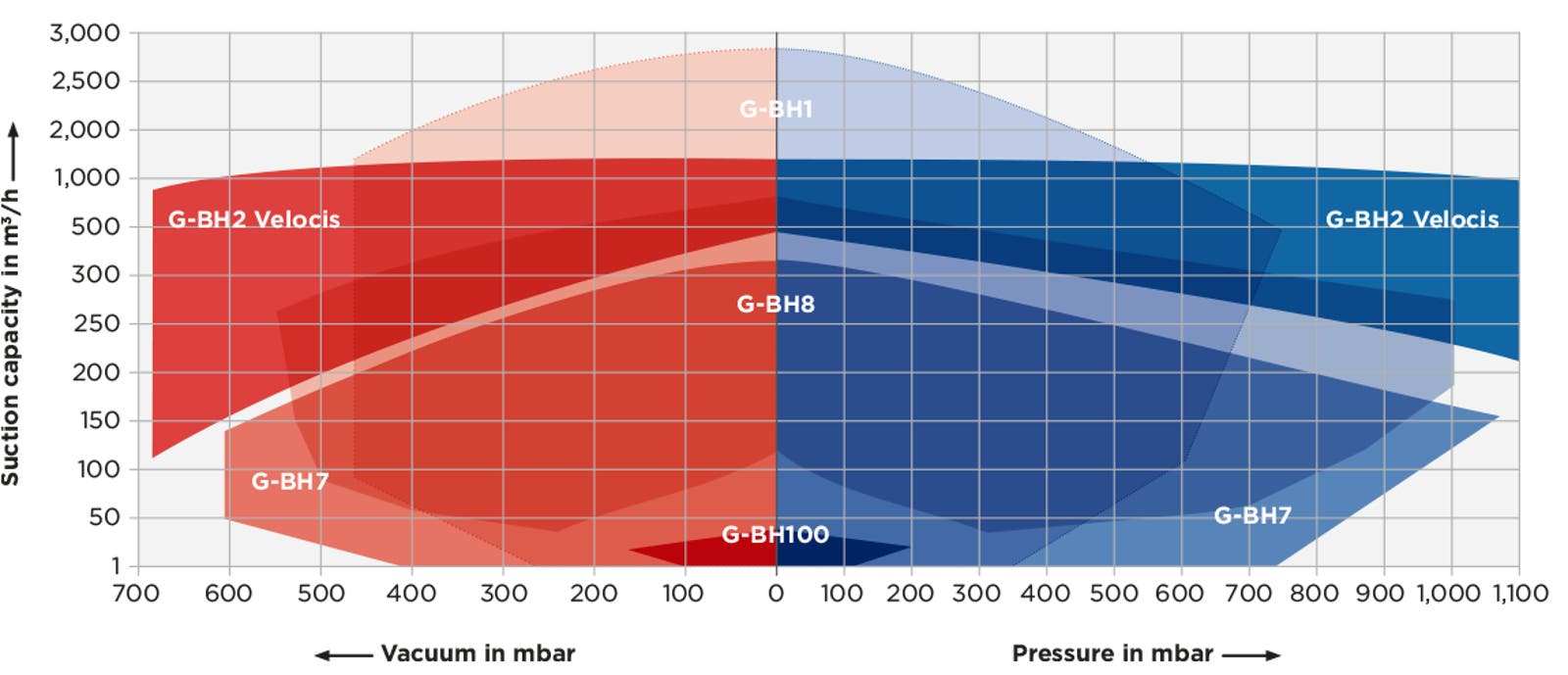
The G-Series side channel blowers deliver a wide range of performance capabilities, with volume flows up to 3,000 m³/h and differential pressures of up to 1,100 mbar. ATEX-certified models ensure safe operation in hazardous environments, while advanced motor technology supports flexible voltage ranges and protection classes up to IP65.
Airmap G-Series

Side Channel Blowers in Vacuum Operation: Can a Side Channel Blower Generate Vacuum?

Efficient and versatile, our Side Channel Blowers meet the requirements of a wide range of industrial environments and provide reliable vacuum and compression performance. Yes, Side Channel Blowers are commonly used for both pressure and vacuum applications (depending on configuration and connection direction).They are particularly suitable when a continuous, low‑pulsation airflow is required and the vacuum level lies in the low to medium vacuum range. Ideal applications include:

Limits & selection notes
Vacuum level vs. flow rate: Side Channel Blowers excel at high flow rates and moderate vacuum. If very high ultimate vacuum levels are required, the technology must be selected accordingly.
Clean, dry gases preferred: For long‑term performance, inlet conditions (filters, particle protection) should be properly designed.
Speed control (VFD) for variable load: Frequency converters are used to adapt speed and performance to changing load conditions, especially when suction demand or differential pressure fluctuates.

Quick comparison
When an application requires moderate vacuum plus high flow rate, a Side Channel Blower is often a very robust solution. For applications requiring very high vacuum levels or other specific process demands, alternative vacuum technologies may be more appropriate depending on the boundary conditions.

Innovating Industrial Efficiency

Efficient and versatile, our side channel blowers meet the needs of diverse industrial environments, offering reliable vacuum and compression technology. Ideal applications include:

Applications

Side Channel Blowers are used in many industries because they are reliable, compact, low-maintenance and can handle both vacuum and pressure applications.

1) Pneumatic Conveying (Granules, Powders, Light Bulk Materials)

Typical Task: Transporting or conveying material (suction or pressure conveying).

Decision Criteria:

  • Required flow rate (throughput) and system pressure/vacuum
  • Continuous operation vs. intermittent duty (load profile)
  • Dust/particles → suitable filtration/protection concept

2) Drying & Process Air (e.g., process air supply, air-knife applications)

Typical Task: Constant airflow to support drying or process steps.

Decision Criteria:

  • Required pressure level and energy efficiency at the operating point (avoid oversizing)
  • Noise requirements (silencers/acoustic protection)

3) Vacuum Lifting, Holding, Handling

Typical Task: Holding or transporting workpieces, packaging or components using vacuum cups.

Decision Criteria:

  • Number/size of vacuum cups, leakage → typically flow-driven
  • VFD / speed control for changing loads or leakage conditions

4) Aeration / Ventilation (e.g., water tanks, process aeration)

Typical Task: Introducing air continuously and evenly.

Decision Criteria:

  • System backpressure, tank depth, continuous operation, energy demand

5) Packaging Support (Handling, Vacuum Support, Process Air)

Typical Task: Providing process air or vacuum where packaging lines require support.

Decision Criteria:

  • Hygienic environment/clean air routing, noise, controllability

Use Case: Connected Material Conveying in the Plastics Industry

Problem: In large plastics production environments, conveying distances and material throughput can vary significantly (e.g., depending on machine, formulation, granulate, and pipe lengths). At the same time, energy consumption and noise levels must remain low.

Solution: A leading provider of continuous raw‑material handling systems integrated Elmo Rietschle Side Channel Blowers and vacuum pumps into a fully automated, centrally monitored material conveying system. With speed‑controlled, energy‑efficient Side Channel Blowers (inverter technology), the airflow is adjusted precisely to the required material throughput.

Result:

  • The performance range of the frequency‑controlled Side Channel Compressors was expanded up to 22 kW — enabling flexible conveying requirements.
  • Example calculation: €3,900 savings over 20,000 operating hours when a frequency‑controlled 11 kW Side Channel Compressor uses just 10% less energy (at €0.13/kWh).
  • Sound‑pressure levels can be significantly reduced through modern sound engineering — important for noise‑sensitive production environments.

How a Side Channel Blower Works

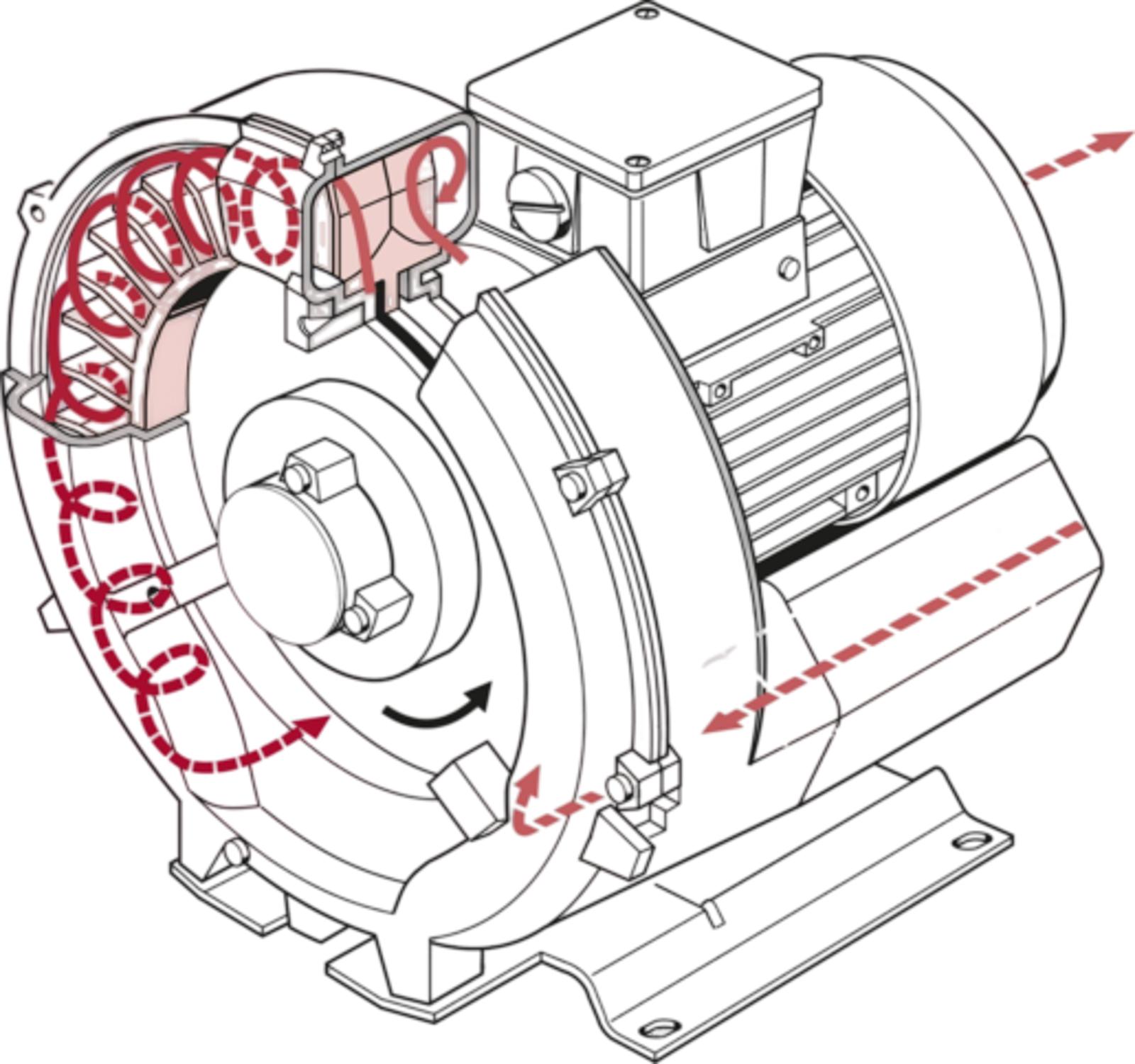
A Side Channel Blower operates using contact-free flow compression: the impeller is mounted directly on the motor shaft, accelerating the gas inside the side channel by centrifugal force. Pressure or vacuum is generated through repeated energy transfers along the side channel.

Step-by-step

1. Intake: Gas is drawn in through the inlet and enters the side channel.

2. Acceleration: Centrifugal force accelerates the gas radially outward in the impeller blades, then guides it along the inner side channel wall back toward the impeller.

3. Pressure build-up: With each re-entry into the impeller, kinetic energy is added to the gas along the side channel, increasing pressure. Every rotation increases kinetic energy — pressure (or vacuum on the suction side) rises progressively along the channel.

4. Discharge: At the interrupter, the side channel cross-section narrows, the gas is stripped from the blades, and exits the machine through the discharge silencer.

Why multi-stage design matters.

Two- and three-stage models compress the gas across multiple stages to achieve higher pressure ratios and improved performance.

G Series Function

Discover the Technology Behind Reliable Power

Take a closer look at how our G-Series side channel blowers deliver powerful, contact-free compression with minimal maintenance. This short video demonstrates the operating principle, showcasing the impeller and side channel design that ensures efficient and quiet performance.

Side Channel Blower Catalogue

Elevate your capabilities with Elmo Rietschle's latest Side Channel Blower catalogue. Explore our expansive selection of high-performance solutions crafted for precision and durability.

Why Elmo Rietschle Stands Out:

  • Peak Efficiency: Experience unmatched reliability and performance with our Side Channel Blowers.
  • Adaptability: Versatile options that cater to various industrial applications.
  • Cutting-Edge Technology: Benefit from the forefront of blower innovation and design.
elmo-g-series

Need to configure your blower?

Download the InverterPC tool for easy setup and diagnostics.

FAQ – Side Channel Blowers (G‑Series)

A Side Channel Blower is a dry‑running, contact‑free solution for vacuum and compression applications used in many industrial processes.