
How Claw Vacuum Pumps Work
Industrial manufacturers rely on vacuum technology for packaging, pneumatic conveying, thermoforming, CNC machining, plastics processing, and countless other applications. Among the most efficient dry-running technologies available today is the claw vacuum pump.
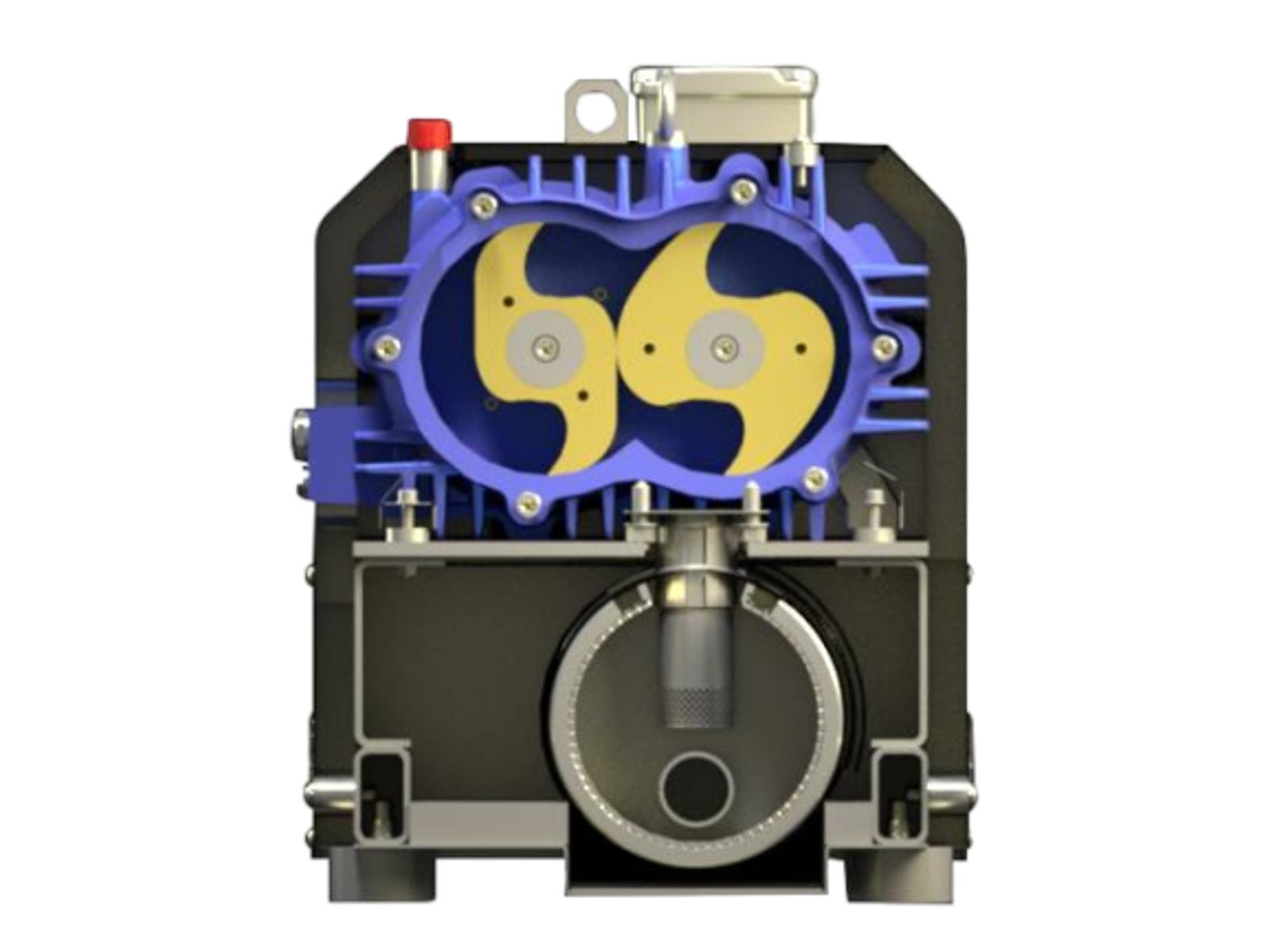
Claw vacuum pumps generate vacuum using two synchronized claw-shaped rotors that rotate without contact inside the compression chamber. Because the rotors never touch each other or the housing, the pump operates with minimal wear, low maintenance requirements, and clean, oil-free compression.
This guide explains how claw vacuum pumps work, their key components, advantages, and common industrial applications.
What Is a Claw Vacuum Pump?
A claw vacuum pump is a positive displacement vacuum pump that creates vacuum through internal compression. Two claw-shaped rotors rotate in opposite directions inside a precisely machined housing.
As the rotors turn, air is drawn into the inlet, trapped between the claws and housing, compressed through a reduction in volume, and discharged through the outlet.
Unlike many vacuum technologies, claw pumps operate without lubricants in the compression chamber. This dry-running design helps eliminate the risk of process contamination while reducing operating costs.
How Does a Claw Vacuum Pump Work?
Step 1: Gas Enters the Inlet
As the claw rotors rotate, an expanding chamber is created near the inlet port. This expanding volume lowers pressure and draws air or process gas into the pump.
Step 2: Gas Is Transferred Through the Compression Chamber
The synchronized claws move the trapped gas through the pump housing. Since the rotors never contact one another, there is no friction within the compression chamber.
Step 3: Internal Compression Occurs
As the chamber volume decreases, the gas becomes compressed. This internal compression improves efficiency compared to technologies that rely solely on external compression.
Step 4: Gas Is Discharged
The compressed gas exits through the discharge port at a higher pressure. The process repeats continuously, creating reliable vacuum generation.
Key Components of a Claw Vacuum Pump
Component | Function |
|---|---|
Claw Rotors | Move and compress gas through the pump |
Pump Housing | Forms the compression chamber |
Precision Timing Gears | Synchronize rotor movement without contact |
Motor | Drives the rotors |
Cooling System | Helps maintain operating temperatures |
Bearings & Seals | Support rotor operation and system reliability |
Why Claw Vacuum Pumps Are So Efficient
Internal Compression
Unlike some vacuum technologies that transport gas before compression occurs, claw vacuum pumps compress gas internally, improving energy efficiency.
Contact-Free Operation
The claw rotors do not touch each other or the housing. This reduces wear and contributes to a long service life.
Dry-Running Technology
No oil is required inside the compression chamber, helping eliminate product contamination risks and reducing maintenance requirements.
Reduced Downtime
Fewer wear components mean fewer service interruptions and lower lifecycle costs.
Benefits of Claw Vacuum Pumps
Energy Efficiency
Internal compression helps reduce power consumption compared to many traditional vacuum technologies.
Clean Vacuum Generation
The oil-free compression chamber makes claw pumps ideal for contamination-sensitive processes.
Low Maintenance
With contact-free operation and minimal wear parts, maintenance intervals are often extended.
Long Service Life
Precision-engineered components and reduced internal friction contribute to reliable long-term operation.
Environmental Benefits
Dry-running operation eliminates the need for routine oil handling and disposal within the compression chamber.
Common Applications for Claw Vacuum Pumps
Claw vacuum pumps are widely used across manufacturing industries where reliability, cleanliness, and efficiency are essential.
Industry | Common Applications |
|---|---|
Pneumatic conveying, material transfer | |
Vacuum packaging, tray sealing | |
Product handling and packaging | |
CNC hold-down systems | |
Pick-and-place equipment | |
Sheet handling and vacuum transport | |
Centralized vacuum systems |
Claw Vacuum Pumps vs Other Vacuum Technologies
Technology | Compression Type | Contact-Free | Oil-Free Compression Chamber | Typical Strength |
|---|---|---|---|---|
Claw Vacuum Pump | Internal Compression | Yes | Yes | High efficiency and low maintenance |
Rotary Vane Vacuum Pump | Positive Displacement | No | Depends on model | Deep vacuum capability |
Screw Vacuum Pump | Internal Compression | Yes | Yes | High-volume industrial processes |
Liquid Ring Vacuum Pump | Fluid-Sealed Compression | No | No | Wet and contaminated processes |
Side Channel Blower | Dynamic Compression | Yes | Yes | High airflow, low vacuum levels |
How to Choose a Claw Vacuum Pump
When selecting a claw vacuum pump, consider:
- Required vacuum level
- Operating pressure range
- Process gas characteristics
- Duty cycle requirements
- Energy consumption goals
- Ambient operating conditions
- Maintenance expectations
For applications that require clean, efficient, and reliable vacuum generation, claw technology is often one of the most cost-effective solutions available.
Frequently Asked Questions
A claw vacuum pump is a dry-running positive displacement vacuum pump that uses two synchronized claw-shaped rotors to generate vacuum through internal compression.
Reach Out to Us