
ElmoRietschle-Logo-RGB-scaled.jpg

Reach Out to Us

Have questions or need more information? Choose one of the options below to contact us, request a service, or find a local distributor

Liquid Ring Vacuum Pumps & Compressors – the robust solution for wet processes

Liquid Ring Vacuum Pumps are ideal when process gases contain moisture, steam load, or entrained condensate, wherever other technologies reach their limits due to deposits, corrosion, or unstable performance.

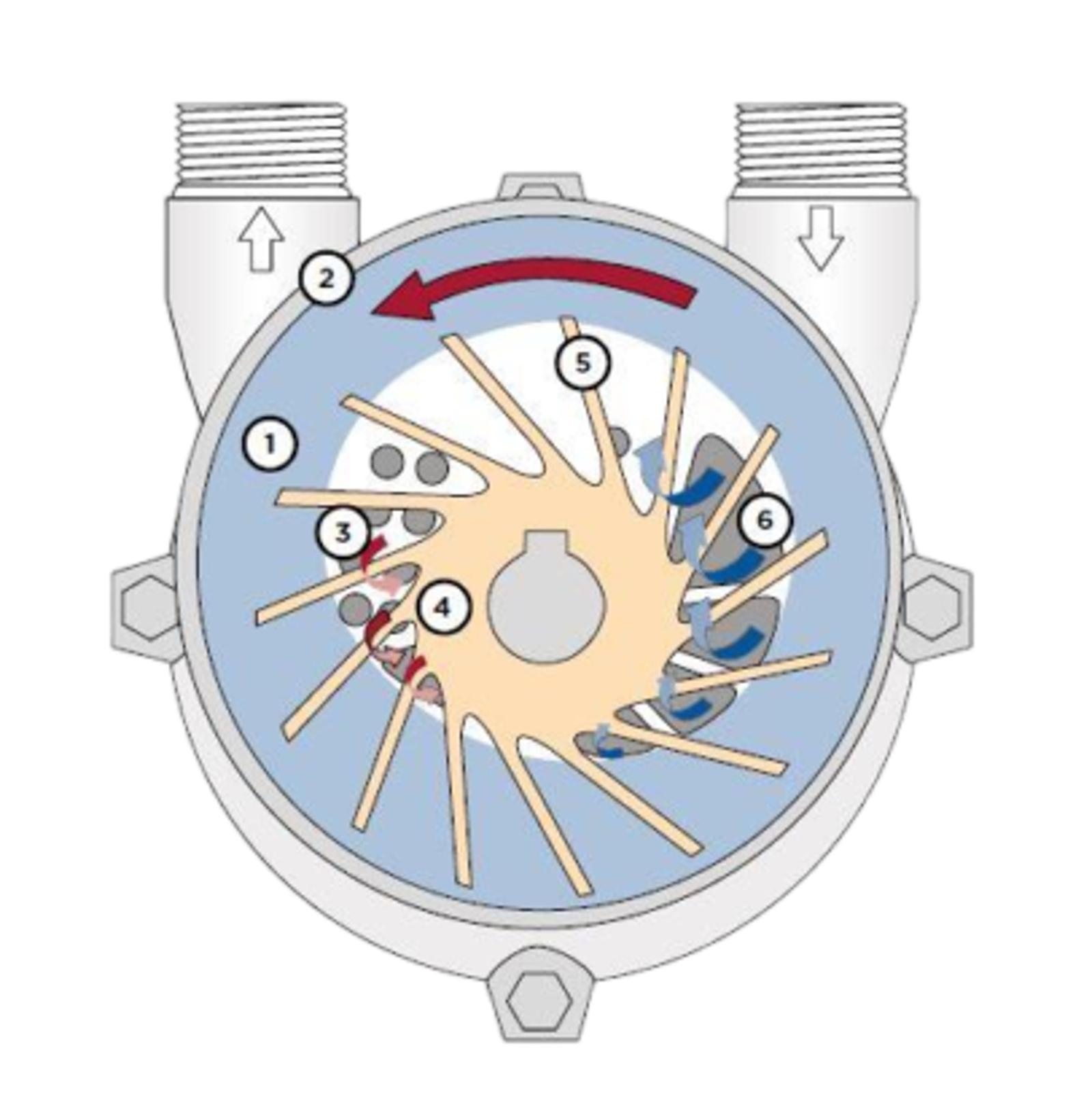
The operating principle is based on an eccentrically mounted impeller that forms a liquid ring: this seals the cells between the blades, enables gas handling, and dissipates compression heat through the operating liquid.

Liquid Ring Technology

Elmo Rietschle’s L-Series pumps utilize advanced liquid ring technology to deliver efficient and reliable performance in wet and abrasive environments.

The operating principle involves an eccentrically mounted impeller rotating within the pump casing, forming a liquid ring that seals the impeller blades. As gas enters through the suction port, it is trapped in blade cells and compressed as the impeller rotates. The liquid ring enables simultaneous vacuum and compression operations, making these pumps versatile and efficient for diverse applications.

Key features of the L-Series include:

Ceramic Coating: Prevents lime scaling and ensures steady performance.

Maximum Abrasion Resistance: Withstands harsh conditions for long-term durability.

Superior Corrosion Resistance: Ideal for environments with aggressive media.

Monobloc Design: Prevents deposits and metal contact for maintenance-free operation.

Enhanced Water Carryover Tolerance: Adds versatility across industrial processes.
Selection / Application Limits

Selection & application limits – what matters in practice

To ensure a Liquid Ring Vacuum Pump operates reliably in the process, the following parameters should be clarified early on:

1) Medium & process gas (moist/wet, steam, condensate, solids)

Liquid Ring Vacuum Pumps are particularly suitable for moist, steam‑laden or “dirty” gas streams, since the operating liquid acts as a sealing and transport medium and flushes out impurities.

In practice:

  • Does the gas contain condensable vapors (e.g., water vapor, solvent vapors)? → Liquid Ring is often a robust choice, as condensation can occur directly inside the pump.
  • Does the gas contain entrained liquid or fluctuating loads? → Liquid Ring technology is typically less sensitive to these conditions than many dry‑running concepts.

2) Temperature & achievable ultimate vacuum

The achievable ultimate vacuum of Liquid Ring Vacuum Pumps is limited by the vapor pressure of the operating liquid: the suction pressure cannot drop below the vapor pressure of the liquid used.

Important: As the operating liquid temperature increases, vapor pressure rises and the achievable ultimate vacuum decreases.

Practical recommendation:

  • For stable vacuum levels: cool the operating liquid or use a circuit with a heat exchanger.

3) Materials & corrosion/abrasion exposure

For aggressive media, abrasive particles, or scaling tendencies, material and coating selections are critical to prevent corrosion, abrasion, and performance loss.

The L‑Series offers ceramic coatings and corrosion‑resistant material options to ensure long‑term stability in wet processes.

4) Operating liquid & water management

Because the operating liquid plays a central role (sealing/cooling/condensing), proper liquid management is essential: separators, circulation, replenishment, and treatment where required.

The L‑Series highlights water‑efficient circulation concepts and robust configurations depending on model.

Features

  • Reliable performance in wet and abrasive environments
  • Long-lasting materials including stainless steel and ceramic
  • Reduced maintenance requirements with monobloc design
  • Energy-efficient operation with advanced liquid ring technology
  • Suitable for vacuum, compression, and combination applications
  • International certifications, including ATEX

Performance & Technical Specifications: Liquid Ring Vacuum Pumps

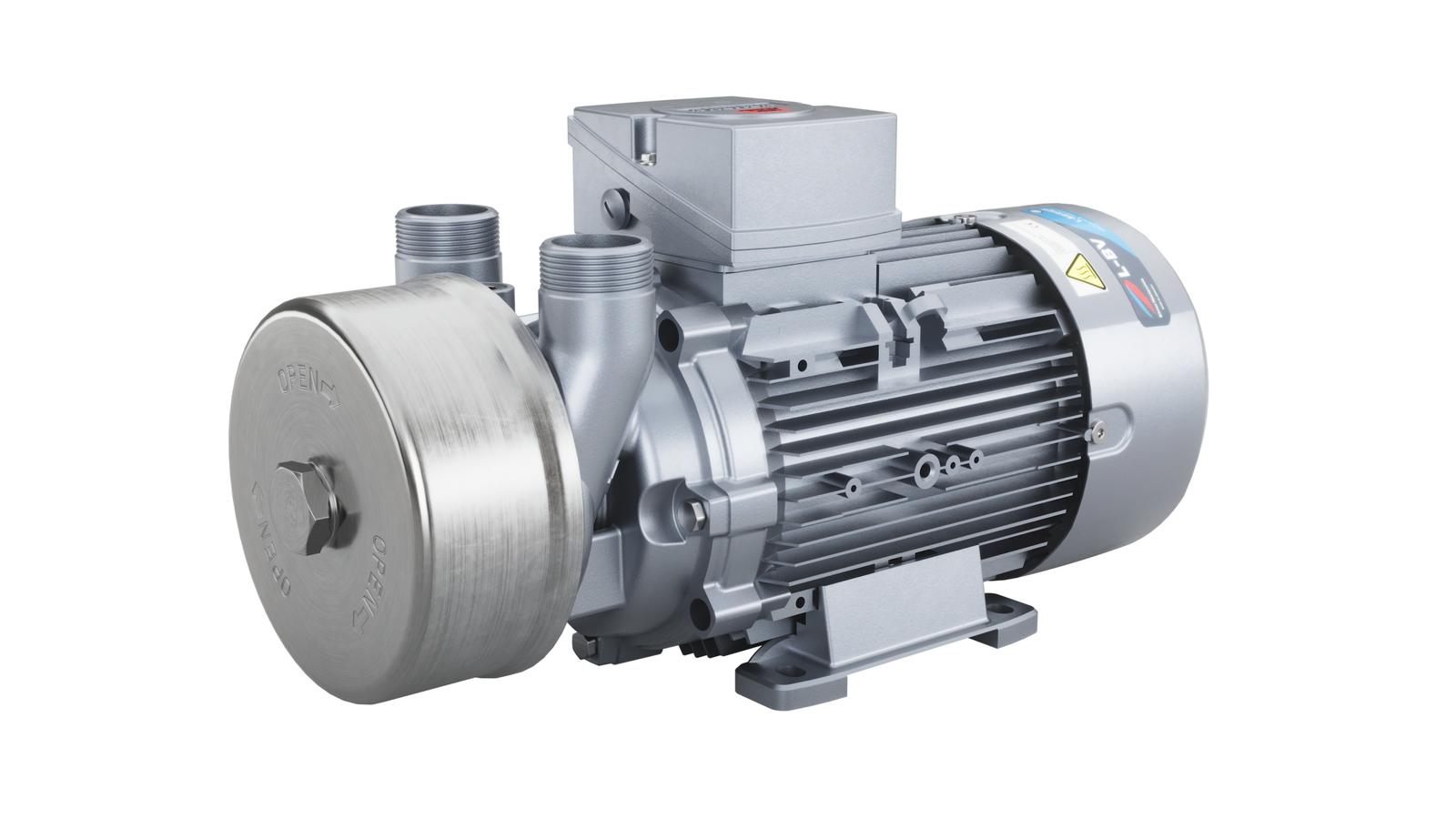
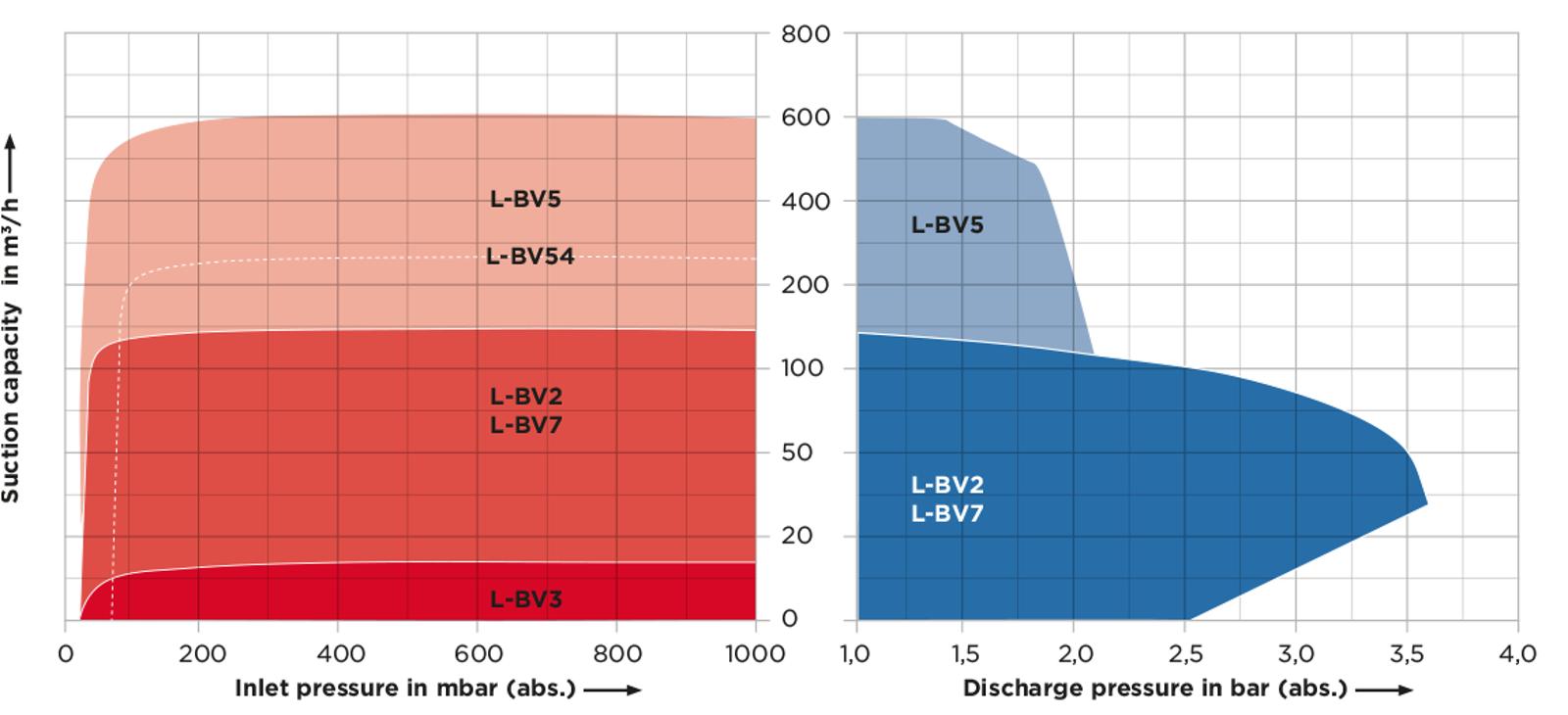
The L-Series liquid ring pumps deliver reliable vacuum and compression performance with optimized energy efficiency, advanced liquid ring technology, and durable materials like ceramic and stainless steel, ensuring long-term operation in demanding industrial environments.
airmap_l-series

Innovating Industrial Efficiency

Elmo Rietschle’s L-Series liquid ring pumps are trusted across industries for their versatility, efficiency, and durability. Common applications include:

Applications

  • Environmental Engineering
  • Food and Beverage Industries
  • Lifting and Handling
  • Packaging Industry
  • Plastics Industry

How It Works: Liquid Ring Pumps

The operating principle of Elmo Rietschle’s L-Series liquid ring pumps is both simple and innovative.An eccentrically mounted impeller rotates within the pump casing, forming a liquid ring that seals the impeller blades. As gas enters through the suction port, it is trapped in blade cells and compressed as the impeller rotates. This compression creates a pressure difference, enabling the pump to function as both a vacuum pump and a compressor.
Liquid is continuously drawn into the compression chamber to stabilize the liquid ring. It is then expelled with the conveyed gas, ensuring smooth operation. For enhanced efficiency, the expelled liquid can be recirculated using standardized circuit units, reducing water usage and operational costs.The ability to condense vapor within the conveyed gas adds versatility, allowing liquid ring pumps to replace gas washers, filters, coolers, and exchangers in certain applications. This innovative design ensures stable, efficient operation with minimal liquid supply, making the L-Series a standout choice for wet and challenging environments.
How does a liquid ring pump works

Discover the Technology Behind Reliable Liquid Ring Pumps

Take a closer look at how Elmo Rietschle’s L-Series liquid ring pumps operate with precision and efficiency. Watch this short video to see how advanced liquid ring technology delivers powerful vacuum and compression performance while reducing maintenance and water use.

Comparison Block

Liquid Ring vs. Screw vs. Rotary Vane – when to choose which technology?

The Liquid Ring principle is often the preferred choice when process gases are moist, steam‑laden, or contain condensate/contaminants, and when robust continuous operation is required.

Alternative technologies (e.g., dry‑running screw or rotary vane) can be suitable when the gas stream is dry and well‑defined, or when other criteria (e.g., a specific vacuum level without operating liquid) are prioritized.

Quick check:

  • Moist / condensable components in the gas stream? → Liquid Ring often has the advantage
  • Very deep ultimate vacuum required? → verify whether the vapor pressure limit of the operating liquid is acceptable
  • Aggressive media / abrasion / scaling? → prioritize material/coating options and circulation concept

Performance & Selection Table

L‑Series – quick selection by flow rate & application profile

The L‑Series includes several sizes for wet processes; the following table provides an orientation overview (see product pages/data sheets for detailed specifications).

ModelTypeFlow rate (m³/h)Vacuum / pressure noteTypical application idea
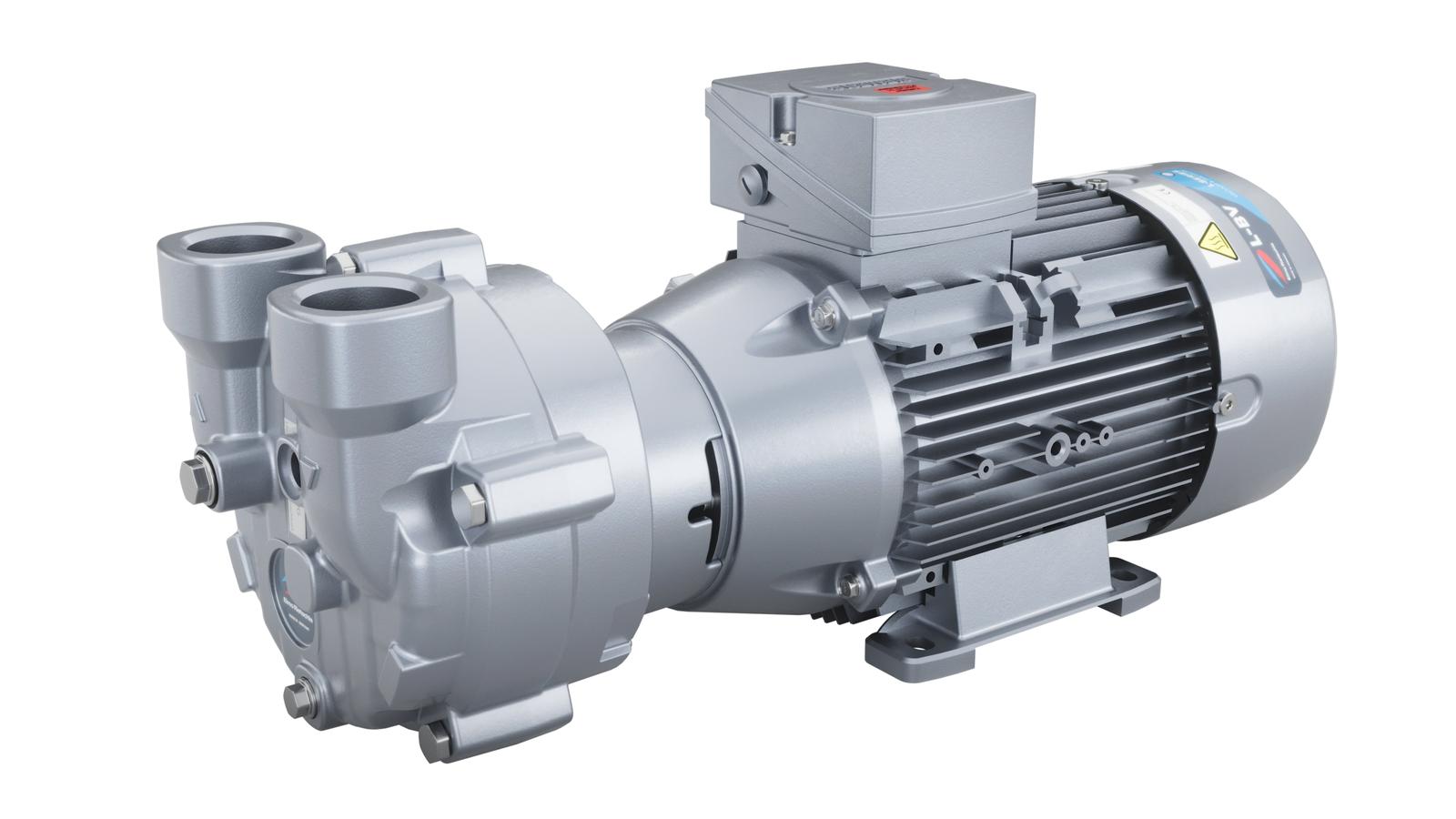
L‑BV2Liquid Ring Vacuum Pump27 – 145Suction pressure up to 33 mbarWet processes, versatile industrial applications
L‑BV5Liquid Ring Vacuum Pump90 – 590Suction pressure up to 33 mbarHigher loads, vapor‑rich / humid processes
L‑BV7Liquid Ring Vacuum Pump27 – 145Energy‑efficient designRobust, varying wet processes
L‑BL2Compact system solution25 – 275"Ready to install"; no additional water requiredEasy on‑site installation, wet environments

Download the L-Series Liquid Ring Pump Catalogue

Your guide to efficient, reliable vacuum solutions.

Explore our full range of Liquid Ring pumps designed for demanding industrial applications. Whether you need high flow rates or compact designs, this catalogue helps you find the right pump for your needs.

• Detailed technical specifications

• Performance features that reduce lifecycle costs

• Integration tips for optimal system efficiency

L-series Image

FAQ – Frequently Asked Questions about Liquid Ring Vacuum Pumps

The ultimate vacuum is limited by the saturation vapor pressure of the operating liquid; the inlet pressure cannot drop below this vapor pressure.